

Philippians
Introduction
Author and Time of Writing
Philippians was written in 64 AD.
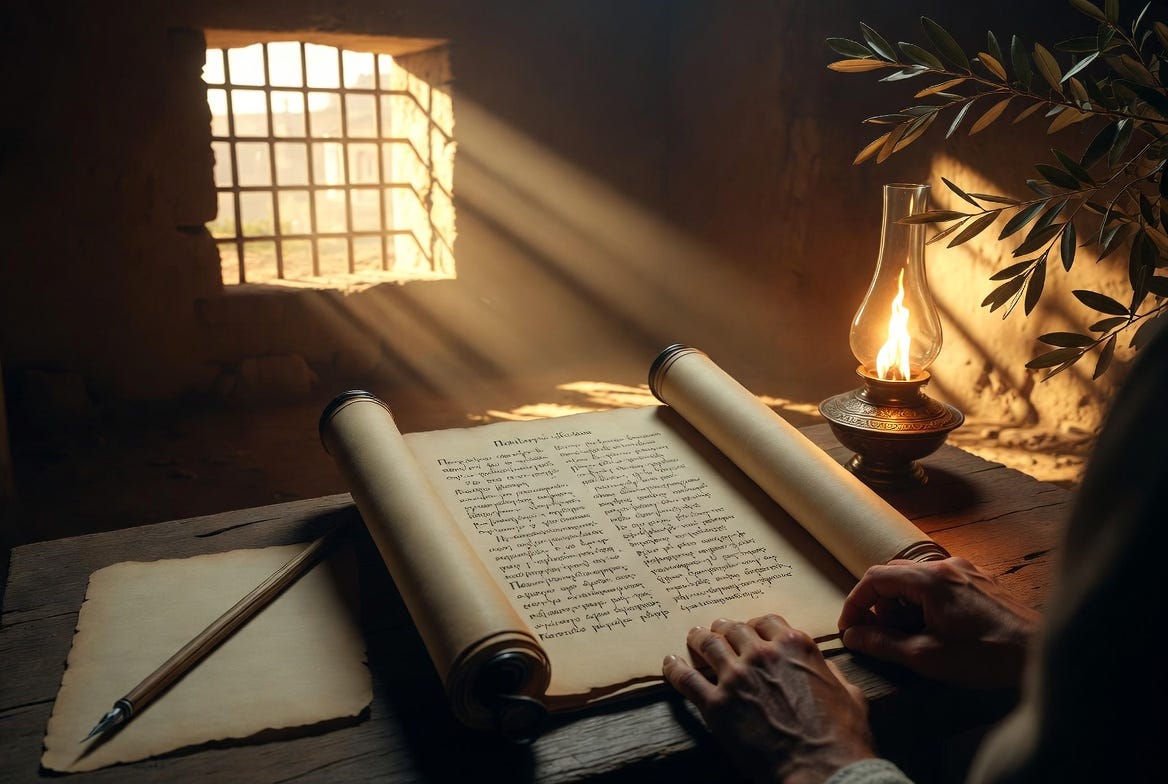
The letter was written from prison in Rome.
Paul is the author of the letter (Philippians 1:1).
Paul writes the letter in response to support sent to him by the assembly through Epaphroditus (Philippians 4:18).
The Letter is Written to the Saints, along with the Bishops and Deacons (Philippians 1:1).
The City of Philippi
Paul brought the gospel to Philippi on his second journey around the region.
Paul and Silas were sent out by the Church in Antioch to strengthen the assemblies (Acts 15:35; 40).
They went through the cities sharing the decree from Jerusalem (Acts 16:4).
The churches were strengthened and increased in number (Acts 16:5).
During their journey, Paul was not permitted to go into Asia (Acts 16:6).
Through a vision, Paul discerns he is to go into Macedonia (Acts 16:9).
Sailing from Troas, the went to Philippi, a colony in Macedonia (Acts 16:11–12).
As was Paul’s custom, he went on the Sabbath to where the Jews congregated for prayer (Acts 16:13).
The assembly began with the salvation of Lydia and her household (Acts 16:14–15).
Satan attempts to thwart Paul’s activities in Philippi.
A young servant girl with a spirit of Python practiced divination followed Paul around (Acts 16:16–18).
She followed Paul and Silas proclaiming they were teaching a way of salvation (Acts 16:17).
Paul rebuked the demon from her (Acts 16:18).
Paul and Silas are falsely accused before the city magistrates by the slave girl’s masters (Acts 16:20–21).
Paul and Silas are beaten and Imprisoned without a trial (Acts 16:22-23).
Paul stood against the magistrates for what they had done, securing peace for the assembly in the city (Acts 16:35–40).
Greeting (Philippians 1:1–2)
Paul addresses the letter from Timothy and himself (Philippians 1:1).
Written to all the saints in Christ Jesus in Philippi (Philippians 1:1).
Paul included the bishops and deacons, indicating the Church is well established at this time.
Bishops of men in the positions of a pastor (1 Peter 2:25—Shepherd even Bishop).
Elders is an equivalent term to a pastor (1 Peter 5:1–2).
Deacons were first established in Jerusalem for the support of the assembly (Acts 6:1–4).
Paul opens with expressing grace and peace to the saints from God the Father and the Lord Jesus Christ (Philippians 1:2).
Grace is God’s attitude whereby He gives a benefit without consideration of merit.
Peace relates to an unruffled mind.
Paul’s Communication with God on Their Behalf (Philippians 1:3–4)
He continually gives thanks to God on their behalf (Philippians 1:3).
He supplicates for them (Philippians 1:4).
Note: The words “prayer” and “request” in the NKJV are both “Supplication”.
Supplication is a cry for help.
Paul’s supplication is done with joy—a mental contentment.
Paul’s joy is on the basis of their fellowship in the gospel (Philippians 1:5).
Paul is confident that God will bring to its intended end the good work begun in them (Philippians 1:6).
This work will continue until the day of Christ (2 Thessalonians 2:2).
The day of Christ refers to the rapture—when the Church is taken off the earth to meet Christ in the air (1 Thessalonians 4:17).
Paul’s frame of mind concerning them is just (Philippians 1:7).
They are partners with him in his chains—having sent financial support.
They are partners in his defense of the gospel.
At Paul’s first defense, no one stood with him (2 Timothy 4:16).
Paul has a great affection for the saints in Philippi (Philippians 1:8).
Paul’s worship to God on their behalf (Philippians 1:9).
They may abound even more in love.
This love abounds in a full experiential knowledge and perception.
Resulting in the testing for approval of the things that differ (Philippians 1:10).
So that in sincerity and without offense, they may remain until the day of Christ (Philippians 1:10).
Sincerity is actions without hidden motives or pretense.
Stirring up sincerity by being mindful of the words of the prophets, apostles, and the Lord Jesus (2 Peter 3:1–2).
We do not peddle the word of God (2 Corinthians 2:17).
Not giving offences to Jew, Gentile, or the Church of God (1 Corinthians 10:32).
Not violating the conscience of others (1 Corinthians 9:20).
Abide by the law of the Christ (1 Corinthians 9:21).
Not violating our own conscience (Acts 24:16).
Join us in person at 811 W. Main Street in Monroe, WA 98272.
If you are unable to join in person, we will have a live broadcast of our main service at 11:00 AM.
And let us consider one another in stirring up love and proper works, not forsaking the gathering of ourselves, just as is the habit of some, but encouraging, and so much more as we see the day approaching (Hebrews chapter 10:24–25).
In a world that often pulls us toward isolation, coming together face-to-face provides encouragement, clarity, and spiritual strength. At Word of Grace Studies, we gather because we value the opportunity to build up one another in truth, to stir up love and proper works, and to grow together in the faith. Whether you can come and fellowship with us or at a local assembly in your area, do not forsake the assembling of the saints, your presence matters—for your benefit and for the encouragement of others.
You’re always welcome to join us and experience the encouragement and connection that come from gathering together.